Using Firearm in Commision of Offence
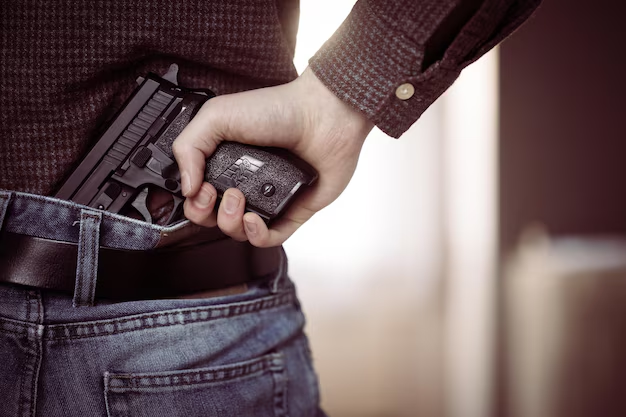
Facing a Firearm-Use Charge in Brampton? Get Immediate Defence.
Facing an allegation that you used a firearm during another offence is one of the most serious situations in criminal law. Mandatory jail, aggressive prosecution, and long-term consequences all come into play the moment this charge is laid.
With over 10 years of defending firearm-related offences in Brampton, I know exactly how quickly these cases escalate and how critical early legal intervention is.
If you've been charged or believe you're under investigation, call me immediately for a confidential consultation.
Understanding the Allegation under the Criminal Code. 85
When the police accuse you of using a firearm in the commission of an offence, they are charging you under section 85 of the Criminal Code—a provision designed to increase penalties when a gun is present during another crime. This isn't a standalone charge. It is an "add-on offence" that sits on top of whatever the Crown says you were doing at the time, whether that's robbery, assault, break, or drug trafficking.
How the Law Defines "Use" of a Firearm
Many people assume the gun must be fired. It doesn't. Under Canadian law, "use" includes:
- Displaying a firearm
- Pointing it
- Carrying it for intimidation
- Producing it during the alleged offence
- Even having it accessible in a way that supports the underlying crime
Because the definition is broad, police often lay this charge even when the evidence is weak or based entirely on assumptions, witness descriptions, or proximity to a firearm.
Mandatory Minimum Penalties You Need to Know
A conviction under s. 85 almost always brings a mandatory minimum term of imprisonment, even if:
- The Firearm was never fired
- No one was injured
- You have no prior criminal record
The Crown only has to prove two things:
- You committed another indictable offence.
- You used or had a firearm accessible during that offence.
That simple structure is what makes this charge so dangerous.
What You're Facing if Convicted
This charge brings some of the toughest sentencing rules in Canadian criminal law, including mandatory imprisonment.
Severe Penalties and Mandatory Jail
A conviction for using a firearm in the commission of an offence triggers mandatory minimum jail sentences under the Criminal Code. These penalties apply even when:
- The Firearm was never discharged
- No one was injured
- You've never been in trouble before
The sentence increases if the Crown alleges the Firearm was loaded, operational, brandished, or used to threaten. When combined with the underlying offence—such as robbery, assault, or drug trafficking—the total exposure can be significant.
Aggravating Factors the Crown Relies On
In Brampton courts, prosecutors often highlight factors such as:
- Alleged intent to intimidate or control
- Presence of a prohibited or restricted firearm
- "Public safety risk" in a residential or public setting
- Multiple accused or organized activity
- Any claim that planning or preparation was involved
These aggravating elements can dramatically increase sentencing positions.
Long-Term Consequences Beyond Jail
A conviction has effects far beyond the courtroom. You may face:
- A lifelong criminal record
- Loss of employment or professional licensing
- Immigration complications for non-citizens
- Future weapons prohibitions
- Significant barriers to travel, especially to the United States
This charge carries weight long after the sentence is served, which is why early defence planning is essential.
Common Situations That Lead to This Charge
When Police Believe a Firearm Was Used to Support Another Crime. Most clients are surprised by how quickly this charge is added to a file. In Peel Region, I frequently see s. 85 charges laid in scenarios such as:
- Robbery or break-and-enter allegations
- Traffic stops that escalate into firearm investigations
- Drug trafficking or possession for the purpose
- Allegations based on CCTV or third-party descriptions
- Joint enterprise situations involving multiple accused
- Cases with replicas, BB guns, or inoperable firearms
These situations show how broad and aggressive the application of this charge can be—and why early defence work is crucial.
Why Choosing the Right Lawyer Matters?
When you're facing a charge that carries mandatory jail, you need a lawyer who understands how these cases are built and how to break them apart. I've spent over 10 years defending firearm-related offences in Brampton, and I know how Peel police investigate, how local Crown prosecutors prosecute, and which arguments actually succeed in this courthouse.
You work directly with me—no junior lawyers, no delegation. I handle every stage myself, from the first call to trial strategy, ensuring your defence is consistent, precise, and tailored to the evidence.
Experience matters most when the consequences are this serious.
How I Defend These Allegations
I focus on the specific weaknesses in the Crown's case. My defence work typically includes:
- Early intervention to protect your rights and control the investigation.
- Challenging whether you actually "used" or even possessed a firearm.
- Charter applications targeting unlawful stops, searches, detention, or questioning.
- Attacking the identification and reliability of witness or CCTV evidence.
- Examining firearm operability and the forensic testing behind it.
- Negotiating reductions or withdrawals to avoid mandatory minimum jail, where possible.
Charges involving the use of a firearm in the commission of an offence carry serious potential penalties under the Criminal Code. Defending these cases often requires careful review of the evidence, including the circumstances of the alleged offence, the classification of the firearm, and the applicability of mandatory sentencing provisions.
What To Do Right Now if You're Charged
When you're accused of using a firearm during another offence, every decision you make after the arrest can affect the outcome. Here are the steps you need to take immediately:
- Do not speak to the police about the incident or the Firearm.
- Avoid discussing the case with anyone, including friends or co-accused.
- Preserve any evidence that may help your defence—messages, videos, call logs.
- Write down key details while your memory is fresh.
- Follow all release conditions to avoid additional charges.
- Contact me as soon as possible so I can intervene early and protect your rights.
A strong defence begins the moment you reach out.
Speak to a Firearm Defence Lawyer Immediately
If you're facing an allegation that you used a firearm during another offence, you cannot afford delays or mistakes. The consequences are life-altering, and early defence work makes all the difference.
Call me now for a confidential consultation:
(437) 998-1429
I'll speak with you directly, review your situation, and start protecting your future immediately.
Frequently Asked Questions
Yes. A conviction under s. 85 almost always carries a mandatory jail sentence. Avoiding that minimum is a core focus of the defence.
Police may still lay the charge before confirming operability. I challenge the forensic testing and the legal qualification of the object as a firearm.
Most firearm cases take several months, depending on disclosure, Charter issues, and whether the matter proceeds to trial.
No. "Use" includes displaying, pointing, producing, or having a firearm accessible during the alleged offence.
Yes, but bail hearings are more complex because firearm allegations trigger stricter scrutiny. Early preparation is critical.
In many cases, yes. Success depends on the evidence, Charter issues, identification problems, and whether the Crown can prove both the underlying offence and firearm "use."