Possession of Weapon For Dangerous Purposes
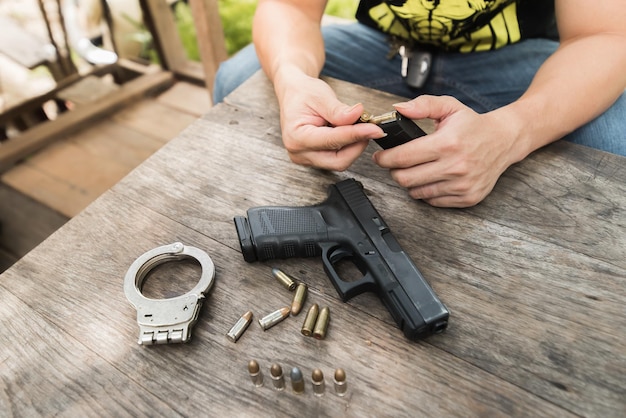
Possession of Weapons For Dangerous Purposes Brampton, ON
Accused of Possessing a Weapon for a Dangerous Purpose? Start Here.
When you're accused of possessing a weapon for a dangerous purpose, the situation escalates quickly. Police assume intent. Prosecutors prepare aggressively. And without experienced defence, a single allegation can lead to jail, a lifelong criminal record, and serious personal consequences. I've spent over 10 years defending clients in Brampton against complex weapon-related charges, and I'm here to protect your rights from the very first moment you reach out.
If you're facing this charge, contact me for a confidential case review today.
What Does "Possession of Weapons for Dangerous Purposes" Mean?
A charge for Possession of Weapons for Dangerous Purposes depends on one core allegation: that you possessed an object with the intent to use it to harm someone, threaten someone, or commit a criminal act. In Canadian criminal law, this offence focuses heavily on intent, behaviour, and context—not just the item itself.
The Criminal Code allows the Crown to treat almost any object as a "weapon" if it believes you intended to use it dangerously. That means knives, tools, bats, household items, and even everyday personal objects can become the basis of a criminal charge.
For the prosecutor to secure a conviction, they must prove:
- You had the object on your person or within your control.
- You intended to use it for a dangerous purpose.
- Your conduct or circumstances suggested a real risk of harm.
In many cases, the police misinterpret the situation. People carry items for work, protection, or routine use, and officers assume the worst. My role is to challenge that assumption and show the court the real story behind the allegation.
How do Police and Crown Attorneys Build These Cases?
When you're charged with Possession of Weapons for Dangerous Purposes, the police and Crown rely heavily on inference. They rarely have direct proof of intent. Instead, they pull together pieces of evidence and attempt to show the court that you meant to use the object dangerously.

Here's what they focus on:
1. Statements and Behaviour
Police examine what you said, how you acted, and whether your behaviour suggested aggression, fear, or preparation for confrontation.
2. Location and Circumstances
Possessing an object in a high-conflict area—streets, bars, parking lots, or during heated arguments—often leads officers to assume a dangerous purpose.
3. Type of Object and How It Was Carried
A concealed knife, raised object, or anything held during a dispute becomes central to the Crown's theory.
4. Witness Statements
Friends, neighbours, bystanders, or complainants may interpret your actions as threatening, even if no threat was intended.
5. Surveillance, Video, and Digital Evidence
Camera footage, text messages, and social media posts are increasingly used to paint a picture of intent.
6. Prior Police History
Even unrelated interactions can influence the direction of an investigation, especially if the police believe there is a pattern.
The Crown combines these factors to argue that the object was meant to be used as a weapon. My job is to separate assumptions from facts and expose the gaps in the prosecution's theory.
Defences I Use to Challenge Dangerous Purpose Allegations
Every case involving Possession of Weapons for Dangerous Purposes turns on intent. If the Crown cannot prove that you planned to use the object dangerously, they cannot secure a conviction. I build your defence by targeting that weakness directly.
Here are the core strategies I use:
1. No Intent to Use the Object as a Weapon
You may have possessed the item for work, utility, or self-protection—none of which automatically creates criminal liability.
2. Lawful Purpose for Possession
Tools, knives, and everyday objects have legitimate uses. I highlight the lawful context that the police overlooked.
3. Object Does Not Qualify as a Weapon in Law
If the item is not inherently dangerous, I challenge the Crown's classification and the assumption that it was meant to cause harm.
4. Self-Defence or Fear for Personal Safety
Carrying something because you were scared or felt unsafe is not the same as planning to use it to commit violence.
5. No Reasonable Basis for Police Assumptions
Your behaviour, tone, or conduct may have been misinterpreted. I show the court why those assumptions are unreliable.
6. Charter of Rights Violations
If the item was obtained through an unlawful search, detention, or questioning, I will seek to exclude the evidence under the Charter.
7. Weak or Inconsistent Witness Evidence
Witnesses often exaggerate, misinterpret, or inaccurately recall events. I cross-examine aggressively to uncover inconsistencies.
By focusing on intent, context, and the Crown's evidentiary gaps, I work to have your charge reduced or withdrawn whenever possible.

How Does the Process Work?
When you're charged with Possession of Weapons for Dangerous Purposes, the first hours and days matter. My process is structured to protect your rights immediately and start building a defence before the Crown shapes its narrative.
Here's how I approach your case:
Step 1: Confidential Case Review
You tell me what happened. I explain the charge, the legal thresholds, and your immediate risks.
Step 2: Immediate Assessment of Police Allegations
I examine the police report, notes, 911 calls, and any initial evidence used to justify the charge.
Step 3: Charter Rights Analysis
I look for illegal searches, detentions, or violations of your rights that could lead to evidence being excluded.
Step 4: Breakdown of the Evidence and Context
I identify gaps in the Crown's claim of "dangerous purpose" and highlight lawful explanations for possession.
Step 5: Strategic Negotiation With the Crown
I push for charge withdrawals, diversions, or reduced charges where possible.
Step 6: Preparing for Trial When Needed
If the Crown refuses to withdraw, I will build a firm trial strategy—targeting intent, reliability, and investigative flaws.
The structure is simple: protect you early, challenge the evidence, and position your case for the strongest possible outcome.

What You Should Do If You're Charged?
A Possession of Weapons for Dangerous Purposes charge moves quickly, and even one wrong step can make the situation worse. These are the immediate actions you should take to protect your case and strengthen your defence from the start.
- Do not speak to the police without legal advice
- Do not contact complainants or witnesses
- Preserve any evidence that helps your version of events
- Write down what happened as soon as possible
- Avoid discussing your case with anyone except your lawyer
- Call a lawyer immediately
My role is to quickly take control of the situation, protect your rights, and prevent the Crown from framing your actions in the worst possible light.
Penalties & Consequences for Possession of Weapons for Dangerous Purposes in Brampton, ON
A charge for Possession of Weapons for Dangerous Purposes carries serious consequences because the allegation is tied to potential violence, not just possession. Even when no one was hurt, the Crown treats these cases aggressively because of the risk it believes existed.
Here's what you're facing under Canadian criminal law:
1. Potential penalties include:
- Jail time (especially if the Crown elects to proceed by indictment)
- Probation with restrictive conditions
- Weapons prohibitions
- Fines
- Mandatory counselling or treatment programs
- Seizure and forfeiture of the weapon
2. Aggravating factors that increase sentencing risk:
- Bringing the weapon to a public place
- Using or displaying the weapon during an altercation
- Alcohol or drug involvement
- Prior criminal record
- Evidence of threats or intimidation
3. Long-term consequences beyond sentencing:
- A permanent criminal record affecting employment
- Barriers to professional licensing
- Immigration complications for non-citizens
- Travel restrictions to countries like the United States
- Difficulty securing housing or volunteer positions
These cases are high-impact. The penalties reach into nearly every part of your life. That is why immediate legal intervention is essential—my role is to protect your record and limit exposure to the harshest outcomes.

What Counts as a Weapon for a Dangerous Purpose Charge?
A "weapon" in Canada is defined broadly. The law focuses less on the object and more on how the police think you planned to use it. This is why so many clients are shocked when something ordinary becomes the basis of a serious criminal charge.

Objects frequently treated as "weapons" under this offence include:
- Knives of any type
- Firearms, airsoft guns, pellet guns
- Imitation or replica firearms
- Brass knuckles, batons, pepper spray
- Screwdrivers, hammers, wrenches, or tools
- Baseball bats or metal bars
- Bottles, chains, locks, or similar items
- Any object capable of causing harm when intent is inferred
The police often rely on assumptions based on how the object was carried, where the incident occurred, or what was said during an argument. But an object only qualifies as a "weapon" if the Crown can prove intent. That is the central issue I challenge when defending these cases.
Why Clients in Brampton Trust Me With These Charges?
Weapon-related allegations move fast, carry high consequences, and often rely on assumptions rather than facts. You need a lawyer who understands how these cases unfold in Brampton and how the Crown builds dangerous-purpose narratives. I bring over 10 years of focused criminal defence experience to every file, and I handle each case personally from start to finish.
Clients trust me because:
- I have significant experience defending Possession of Weapons for Dangerous Purposes charges.
- I take a strategic, evidence-driven approach to dismantling the Crown's theory of intent.
- You deal directly with me—not a junior lawyer, assistant, or team.
- I know how Peel Police conduct these investigations and how local Crown offices prosecute them.
- I negotiate firmly to reduce or withdraw charges whenever possible.
- I prepare every case as if it is going to trial, which strengthens your position early.
- I provide steady guidance so you understand every step of the process.
In weapon offences, precision matters. A single detail can shift the entire outcome of the case. I focus on those details from the moment we speak.

FAQs: Possession of Weapons for Dangerous Purposes in Ontario
Not necessarily. Carrying a knife can be lawful. The issue arises when police believe you intended to use it as a weapon. The charge is based on purpose, not possession alone.
Self-defence is a valid explanation, but the Crown may argue that it shows dangerous intent. I show the lawful context behind why you had the item.
Yes. Charges are often withdrawn when intent is unclear, evidence is weak, or your rights were violated. Many cases resolve through negotiation.
You do not plead guilty or present evidence at the first appearance. We review disclosure, assess the allegations, and start shaping your defence strategy.
Yes. This offence focuses on alleged intent rather than actual harm. Many clients are charged even when no violence occurred.
Jail is possible, especially if the Crown proceeds by indictment or if aggravating factors exist. A strong defence can reduce or eliminate this risk.
Weapon offences can create serious immigration consequences for non-citizens. Early legal defence is essential to protect status.
The type matters less than the alleged purpose. Even everyday objects can trigger this charge if police infer a dangerous use.