Assaulting A Police Officer Brampton, ON
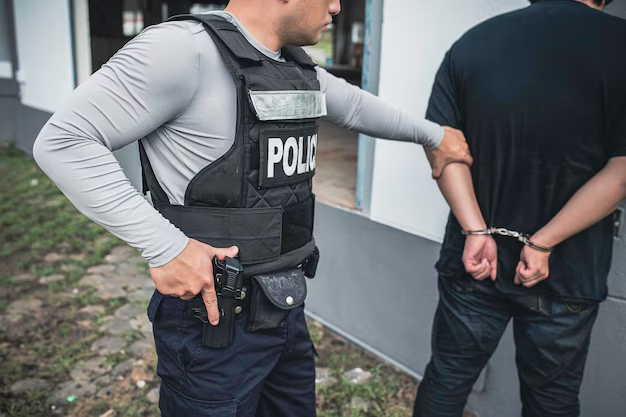
Strategic Defence for Assaulting a Peace Officer, Resisting Arrest, and Obstruction Charges
When you are charged with assaulting a police officer, the stakes are immediately higher than a standard assault charge. Police-related allegations are treated seriously by the Crown, and the consequences can include jail time, a permanent criminal record, and long-term damage to your future. With over 10 years of experience defending clients in Brampton and throughout the Peel Region, I provide focused, strategic legal representation to protect your rights and build the strongest defence possible.
Call now for immediate help:
Understanding the Charge: What Assaulting a Police Officer Means
Assaulting a police officer falls under Section 270 of the Criminal Code, which covers assault against any “peace officer.” This includes police officers, RCMP, correctional officers, by-law officers, and others acting in an official capacity.
You may face this charge if police allege that you:
- Applied force to an officer
- Attempted to apply force
- Interfered with or resisted arrest
- Obstructed an officer acting in the lawful execution of their duties
Many people are charged in moments of confusion, stress, panic, or when excessive force is used during an arrest.
What the Crown Must Prove
To secure a conviction, the Crown must establish that:
- You intentionally applied or attempted to apply force
- The officer was acting lawfully
- The officer was identifiable as a peace officer
- The force was not consensual
- You were the person who committed the alleged act
If any of these elements are weak or unsupported by evidence, the charge may be reduced or withdrawn.
Related Charges That May Be Laid
Police often lay additional charges connected to the same incident, such as:
- Resisting arrest
- Obstructing a peace officer
- Assault with a weapon
- Assault causing bodily harm
- Disarming a peace officer
- Mischief or public mischief
Understanding how these charges interact is critical to building a complete defence strategy.
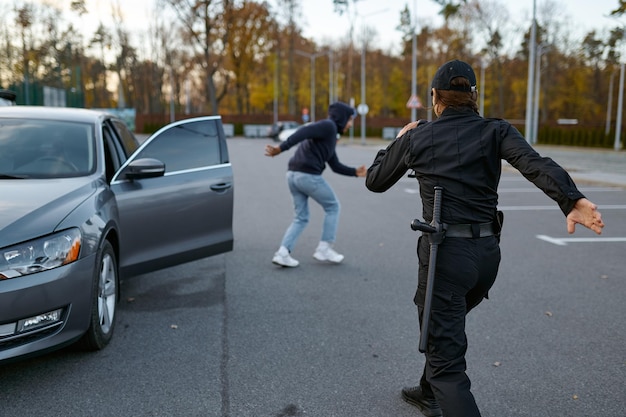
Penalties for Assaulting a Police Officer in Ontario
Penalties for this offence can be significantly higher than regular assault, including:
Jail time (common outcome in serious cases)
- Fines
- Probation
- DNA orders
- Firearm prohibitions
- Travel restrictions
- A permanent criminal record
Aggravating factors can increase penalties, such as:
- Injury to the officer
- Use of a weapon
- Interference with an arrest
- Intoxication leading to aggressive behaviour
If you are a non-citizen, these charges may cause immigration problems, including inadmissibility or removal proceedings.
Why These Charges Are Taken So Seriously
The justice system places a high priority on protecting peace officers. Prosecutors often pursue jail time because:
The charge is seen as an attack on public authority
- Officer safety is a core public policy concern
- The Crown wants to deter similar behaviour
This makes experienced legal representation even more important.
Immediate Consequences After Being Charged
Once arrested or released, you may face strict conditions such as:
- No-contact orders
- Staying away from certain locations
- Mandatory court appearances
- Restrictions on alcohol or drug use
- Fingerprinting requirements
Anything you say or do after being charged can impact your defence. Get legal advice immediately before giving any statements.
Common Situations That Lead to These Charges
These allegations often arise from:
- Heated confrontations during arrest
- Misunderstandings about police instructions
- Intoxication or impaired judgment
- Physical restraint situations where force is misinterpreted
- Mental health or medical crises
- Situations involving multiple officers or body-worn cameras
These cases are not always as clear-cut as the police report suggests.
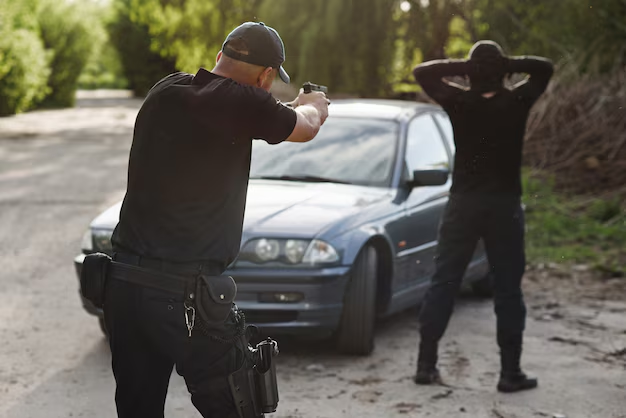
Defences for Assaulting a Police Officer
Every case is unique, but common defences include:
Lack of Intent
You did not intentionally apply force, or the contact was accidental.
Unlawful Arrest or Detention
If the officer acted outside their lawful authority, the charge may be challenged.
Excessive Force by Police
If the officer used unreasonable force, your reaction may be legally justified.
Self-Defence or Defence of Another
The law allows reasonable force to protect yourself from unlawful harm.
Identity Issues
The Crown must prove beyond a reasonable doubt that you were the person involved.
Inconsistent or Unreliable Testimony
Officer statements may conflict with video evidence, civilian witnesses, or officer notes.
Charter Rights Violations
If your rights under Sections 7, 8, 9, or 10 were breached, evidence may be excluded.
Insufficient or Weak Evidence
Many cases rely heavily on police testimony, which must be carefully tested.
How I Defend These Charges
As a Brampton criminal lawyer with more than a decade of defence experience, I take a meticulous and evidence-driven approach, including:
- Examining body-cam footage, witness statements, and officer notes
- Challenging the lawfulness of the arrest
- Identifying credibility issues in police testimony
- Filing Charter applications when your rights were violated
- Negotiating withdrawals, peace bonds, or reduced charges
- Preparing a strong trial defence when necessary
When you work with me, you deal directly with me from day one to the resolution of your case.
What You Should Do If You’ve Been Charged
- Do not discuss the incident with the police
- Do not contact the officer involved
- Preserve any video or witness information
- Seek medical attention if you were injured
- Contact a criminal defence lawyer as soon as possible
The earlier I get involved, the stronger your defence can be.
Why Clients Choose Navdeep Dhindsa?
- Over 10 years of focused criminal defence experience
- Deep understanding of police-related assault allegations
- Strategic, precise, individualized defence
- Strong negotiation and trial experience
- Direct access to me—no junior lawyers or assistants
- Honest advice and realistic guidance throughout the process
My priority is protecting your rights, your future, and your reputation.
Speak With an Assaulting a Police Officer Lawyer in Brampton
If you are facing this charge, do not navigate the process alone. I provide focused, experienced defence for clients across Brampton and the Peel Region.
Call now for urgent assistance: (437) 998-1429
Or request a confidential case review.
Frequently Asked Questions
Yes. Jail is a real risk, especially if injuries or additional charges are involved. Many cases require proactive defence to avoid incarceration.
Yes, depending on the evidence, credibility issues, your background, and negotiation strategy.
Possibly. Assaulting a peace officer can create serious immigration consequences. Seek legal advice before making any decisions.
Absolutely. These cases are often winnable with the right strategy.
If the officer acted unlawfully or used unnecessary force, this may form a strong defence, including self-defence or Charter violations.
Video evidence can support your defence or undermine police accounts. I review all recordings thoroughly.
Intoxication does not excuse the offence, but it may affect intent. It is a factor I analyze carefully when building your defence.
Cases typically take several months to a year, depending on complexity, disclosure, and whether the case goes to trial.